About

Rooted in journalism, artistic and critical practice, and media innovation, Climate Sound & Society is an interdisciplinary organization engaged in sound-based practices that explore the entanglement of nature, sound, and technology. Our mission is to produce and publish impactful journalism for audiences globally, foster artistic & critical practices that generate new ways of knowing, and spawn media innovation with a growing community of scientists, policymakers and organizations.

Sound is a uniquely powerful way to engage and make sense of the climate crisis. Unbeknownst to many, new sound recording technologies such as passive acoustic monitoring and AI are increasingly accessible and embedded throughout global infrastructure and ecosystems, making it possible to listen to places in entirely new ways, expanding our sensorium beyond the human range of hearing and generating recordings and sonic data at a scale never before imagined. In this way, sound is a particularly powerful entry point to understanding the critical topics of our time, and we are already seeing novel uses of sound for conservation data justice, biodiversity monitoring, animal welfare, artistic practice, and in other spheres. 

Based in Copenhagen and at metaLAB at Harvard, Climate Sound & Society’s journalism work is backed by the Carlsberg Foundation and Center for Climate IT in partnership with Copenhagen University’s Behavioural Ecology Group, and recent arts and media innovation projects are in collaboration with the Museum of the United Nations, UN Live, Independent Broadcasters of Ireland, Copenhagen University’s Center for Applied Ecological Thinking, and IT University of Copenhagen’s AIR (Affective Interactions and Relations) Lab. 
People

Kara Oehler

Director, Co-Founder

Kara Oehler is Director of Climate Sound & Society at metaLAB at Harvard and an artist-in-residence at Third Ear. Integrating climate and biodiversity journalism and policy with sound-based scientific researchers and artists from around the world, Climate Sound & Society works in partnership with institutions such as metaLAB(at)Harvard and University of Copenhagen, Museum of the United Nations and Ours to Protect (Ireland). She is also an embedded journalist with the Behavioural Ecology Group at University of Copenhagen. Oehler’s work appears in The New York Times Magazine, RadioLab, The Atlantic, Morning Edition, the Center for Investigative Reporting, Museum of Modern Art NY and others and has been recognized by Peabody, Rockefeller United States Artists, Radcliffe Institute for Advanced Study and others. Oehler has co-founded and led multiple pioneering, interdisciplinary organizations, including Climate Sound & Society, metaLAB(at)Harvard, Zeega, COVID Tracking Project at The Atlantic and UnionDocs Center for Documentary Art.

Brian House

Co-Founder

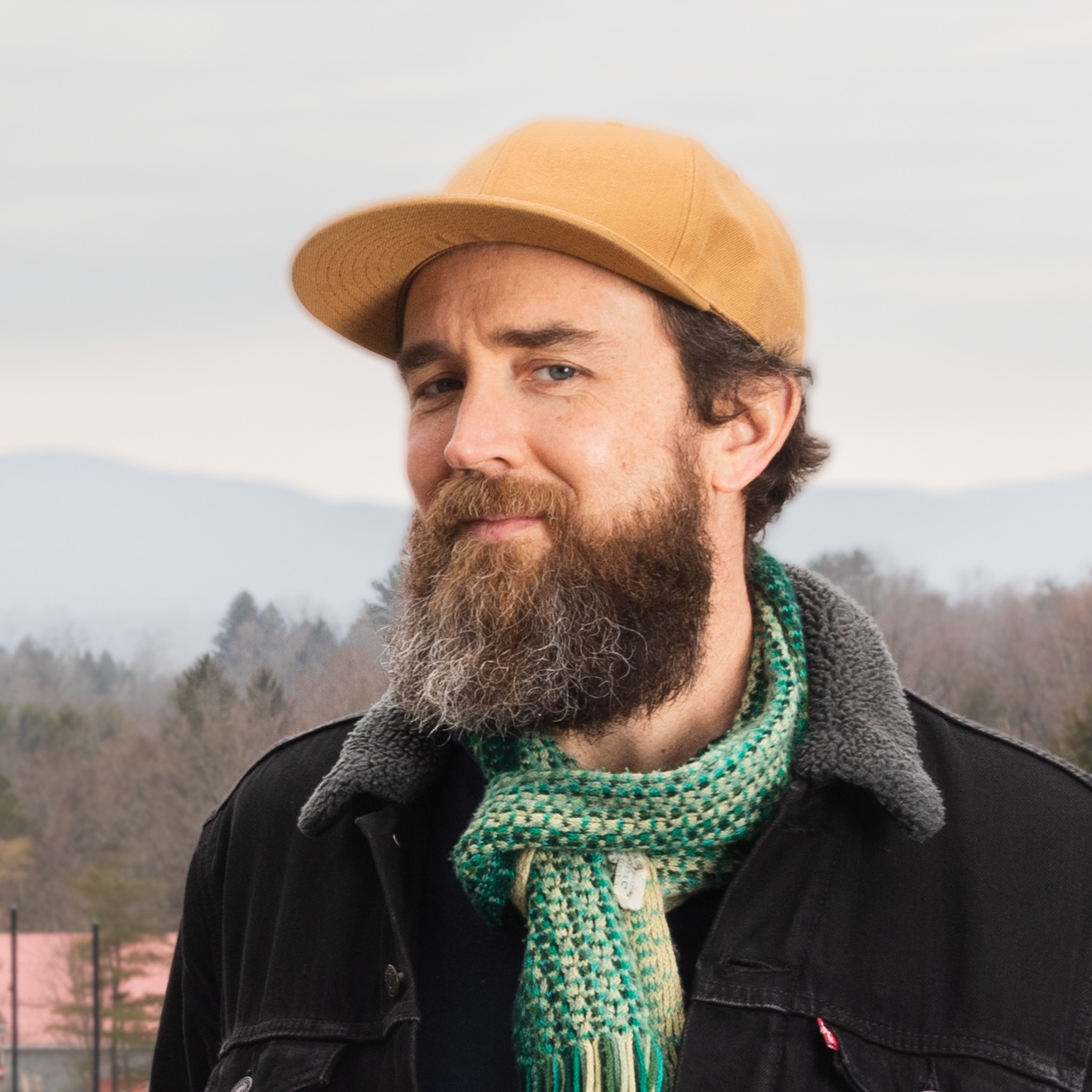
Brian House is an artist who investigates the rhythms of human and nonhuman systems. Through sound, subversive technology, and multidisciplinary research, he makes our interdependencies audible in order to imagine new political realities. Past work has incorporated the sounds of urban rats, vinyl records made from geolocation data, an orchestra distributed throughout a museum, and a street art project covering 467 cities around the world. His current project, Macrophones, explores atmospheric infrasound as a means of listening to the climate crisis.

House is a Creative Capital awardee and has exhibited at MoMA, Los Angeles MOCA, Ars Electronica, ZKM Center for Art and Media, V&A Museum, Beall Center for Art + Technology, Cincinnati Contemporary Arts Center, Stockholm Kulturhust, Science Gallery Bangalore, Fridman Gallery, Issue Project Room, Eyebeam, and Brooklyn Botanic Garden, among other venues. The New York Times MagazineThe WireWIREDThe Guardian, and TIME’s annual “Best Inventions” issue have featured his work, and his research has been published in LeonardoJournal of Sonic StudiesMedia Art Study and Theory, and e-flux Architecture. He has composed for International Contemporary Ensemble, Yarn/Wire, and Robert Black, and has albums on Gruenrekorder, LINE (forthcoming), and Infrequent Seams (forthcoming).

House spent his undergrad at Columbia University’s Computer Music Center, holds a PhD in Computer Music & Multimedia from Brown University, and was Associate Scholar at Columbia’s Center for Spatial Research. He is currently Assistant Professor of Art at Amherst College.

Jeffrey Schnapp

Co-Founder

Jeffrey Schnapp is the founder/faculty director of metaLAB (at) Harvard and faculty co-director of the Berkman Klein Center for Internet and Society at Harvard University. He holds the Carl A. Pescosolido Chair in Romance Languages and Literatures and Comparative Literature in Harvard’s Faculty of Arts and Sciences (his principal appointment) but is also affiliated with the Department of Architecture at Harvard’s Graduate School of Design. He currently serves as Chair of the Department of Comparative Literature.

Originally trained as a literary medievalist, his publications are broadly concerned with knowledge design, cultural history, and media theory and history. They include The Electric Information Age Book (Princeton Architectural Press 2012);  Modernitalia (Peter Lang 2012); The Library Beyond the Book (Harvard University Press 2014), co-authored with Matthew Battles; FuturPiaggio. Six Italian Lessons on Mobility and Modern Life, (Rizzoli International 2017), and, most recently, Storia rapida della velocità (Milan: Il Saggiatore, 2025), winner of the 2025 edition of the Premio di saggistica “Città delle rose.” An expanded English edition of Storia rapida della velocità, entitled Quickening. An Anthropology of Speed is forthcoming with Zone Books in 2026. Also forthcoming in 2026 is La storia d’amore di alluminio e caffeina, Nautilus 020 (Rome: LUISS University Press, January 2026). Two of his English editions/translations of works by Bruno Munari, Fantasy – Invention, Creativity, and Imagination in Visual Communication (2024) and Design and Visual Communication (2025), have recently appeared with Inventory Books in Los Angeles. A third and final volume in the Bruno Munari trilogy is in preparation: the first English translation/edition of Da cosa nasce cosa (One Thing Leads to Another).

Emma Baumhofer

Researcher

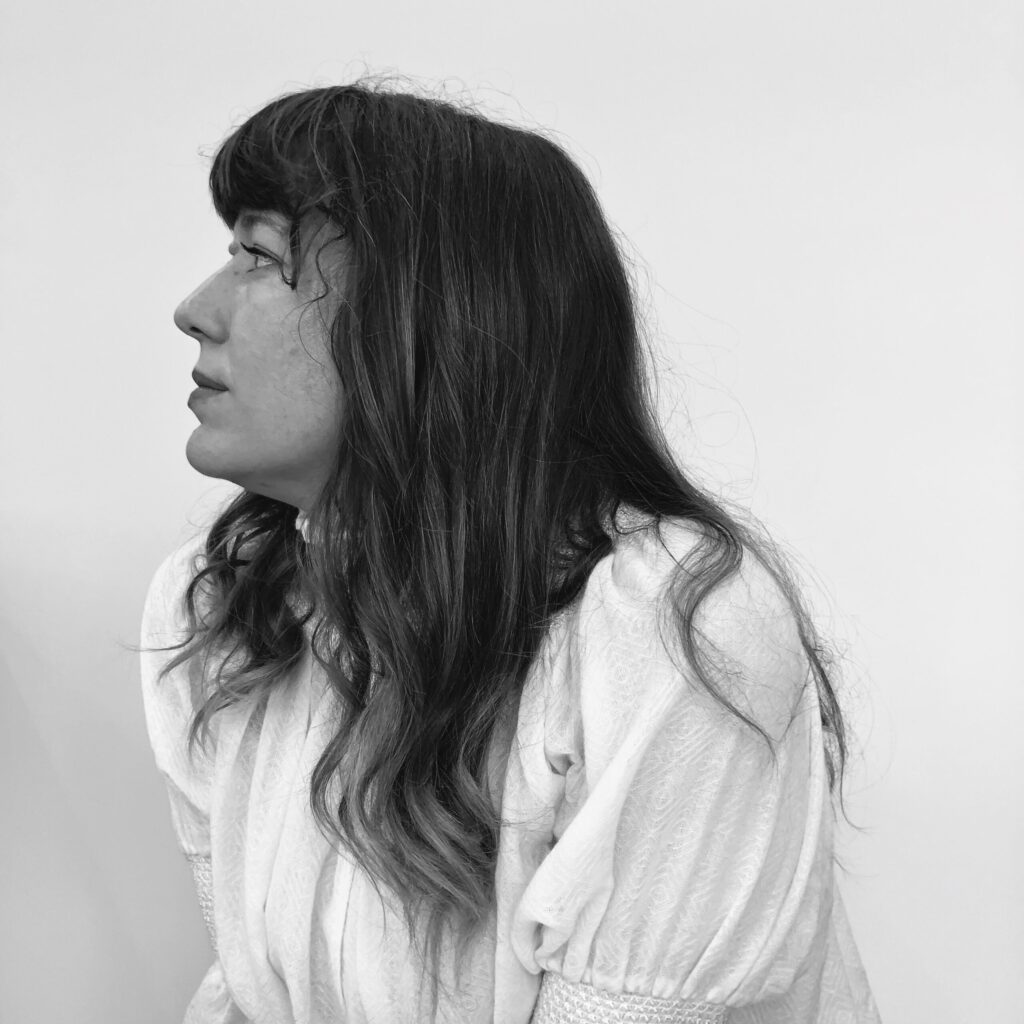
Emma Baumhofer is a transdisciplinary designer and researcher based in Lugano, Switzerland. Her work draws on history and place, using sound and good friction to cultivate attention and care. She collaborates with peacebuilders, academics, and technologists on prosocial design and public engagement projects, and leads workshops and lectures on practice-based methods and research. Emma is currently conducting fieldwork on urban wetland soundscapes in Ticino and developing an installation on amphibian migration and shared ecologies. Previously, she led the digital peacebuilding portfolio at swisspeace and was a Senior Digital Consultant at Media Frontier in Geneva. She holds degrees in interaction design, international history, anthropology, and English.