Copenhagen Climate Sound Series: Can we improve animal welfare by listening to farm animal's emotions?
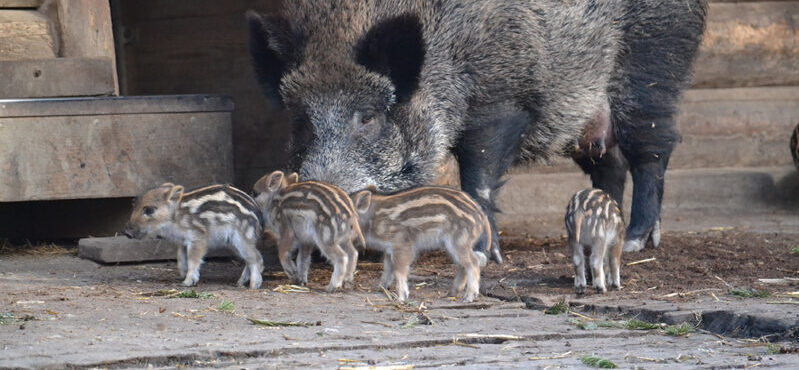
In our second event for the Copenhagen Climate Sound Series, we are very excited to host Elodie F. Briefer and Katy Overstreet on the topic of Sonic Agriculture. Dr. Briefer has frequently been in the news since her groundbreaking work on translating pig grunts into actual emotions appeared in the DR documentary ‘Hvis Grise Kunne Tale’ [If Pigs Could Talk]. In years before the documentary, Dr. Briefer and a team of international researchers used thousands of audio recordings of pigs and designed an algorithm to decode whether an individual pig is experiencing a positive emotion (‘happy’ or ‘excited’), a negative one (‘scared’ or ‘stressed’) or somewhere in between. The recordings were collected in a wide range of situations encountered by commercial pigs, both positive and negative, from when they are born until their deaths.
When the study was published in 2022, Dr. Briefer said it demonstrated “that animal sounds provide great insight into their emotions. We also prove that an algorithm can be used to decode and understand the emotions of pigs, which is an important step towards improved animal welfare for livestock.”
At the time, there was even talk of an app for farmers “so farmers could listen to improve the welfare of their animals,” says Elodie Briefer. “We have trained the algorithm to decode pig grunts. Now, we need someone who wants to develop the algorithm into an app that farmers can use to improve the welfare of their animals.”
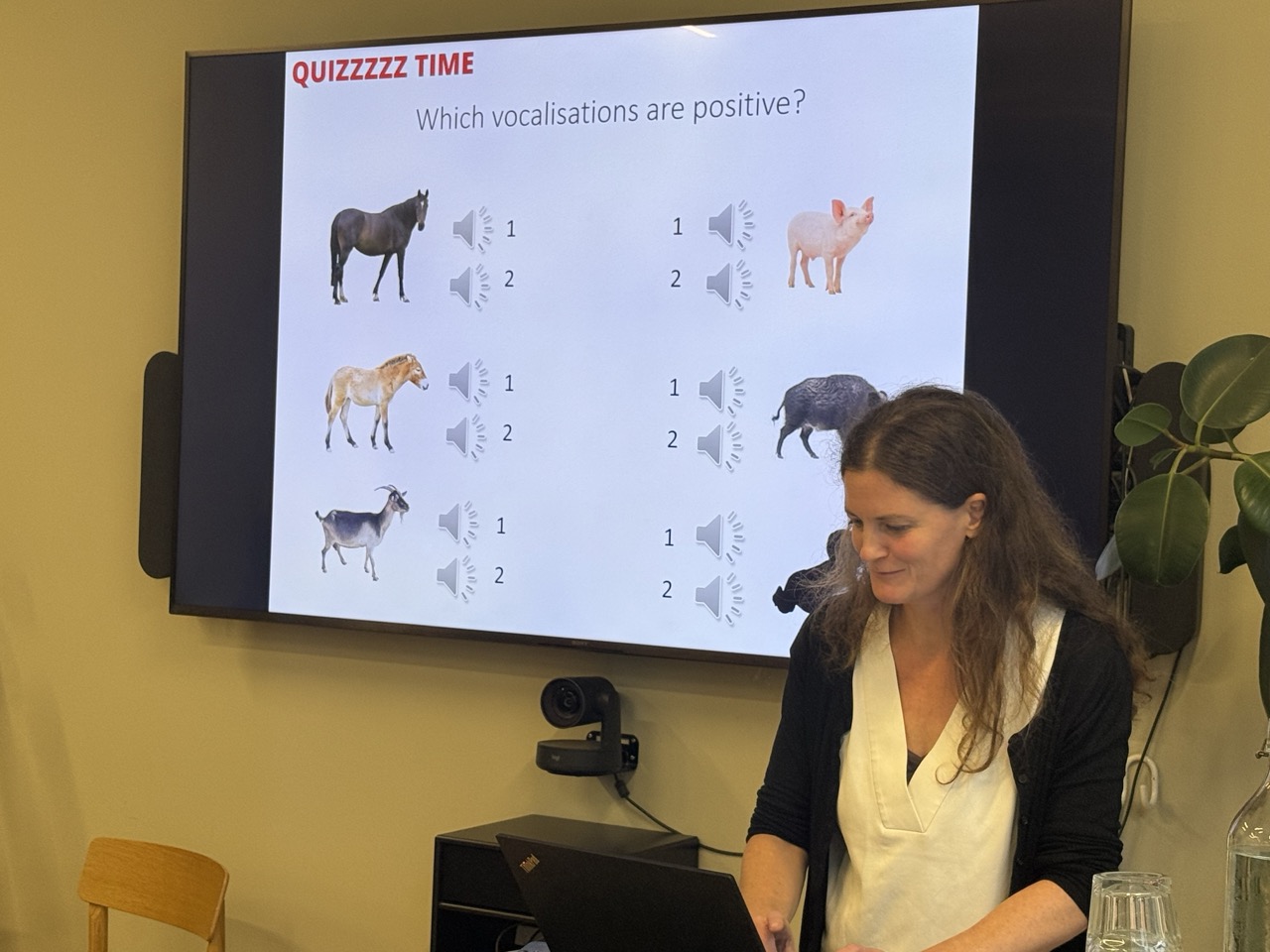
In her talk, Dr. Briefer will discuss developments in decoding emotions in animals in captivity. She’ll also dive into ways her lab at KU, the Behavioural Ecology Group, is using machine learning to listen in on the emotional states of other species like hedgehogs and goats, and using sound recording and AI for conservation.
We’ll also hear from KU’s Dr. Katy Overstreet about Green digestions: listening between the climate and the gut in cattle worlds.
A key source of agricultural climate emissions is the bovine gut. As cattle digest the fibrous plants of pastures or processed feeds, they produce significant amounts of methane through eructation (burps) and flatulence (farts). As climate initiatives gain momentum, animal scientists are looking into ways to ‘green’ farm animals through nutritional, breeding, and pharmaceutical interventions. Techno-modernism and approaches that emphasize techno- scientific approaches to reducing the production of enteric methane (methane produced within the gut through fermentation) have taken center stage in these projects. Based on ethnographic fieldwork in dairy worlds of the American Midwest and Denmark, Katy will discuss modes of listening that shape efforts to green cattle digestion, dilemmas related to greening farmed animals, and the possibilities of radical listening for exploring alternative modes of engaging cattle-climate-landscape relations.
The discussion will be moderated by Kara Oehler of the Institute for Climate Sound & Society.
About the Copenhagen Climate Sound Series
We are very excited to announce a new partnership with Institute for Climate Sound & Society at metaLAB Harvard, whose founder and executive director Kara Oehler is now based in Copenhagen. Our initial project together is the Copenhagen Climate Sound Series, a three-part event sequence hosted by Oehler that brings together pathbreaking scholars and artists working with sound, which has taken on an increasingly crucial role as a medium and research tool for understanding the impacts of climate change, and also as a way for people to engage with and listen to the nonhuman world, expanding our relationship to nature.
Combining the potential of new technologies like passive acoustic monitoring and AI with centuries of Indigenous knowledge and decades of work in fields such as bioacoustics, ecoacoustics, and sound studies, sound is being used to monitor species, support conservation justice, and explore new arenas of human and nonhuman relations. The series will feature pathbreaking leaders across these fields, including Joycelyn Longdon, Jana Winderen and Elodie F. Briefer.

Participants
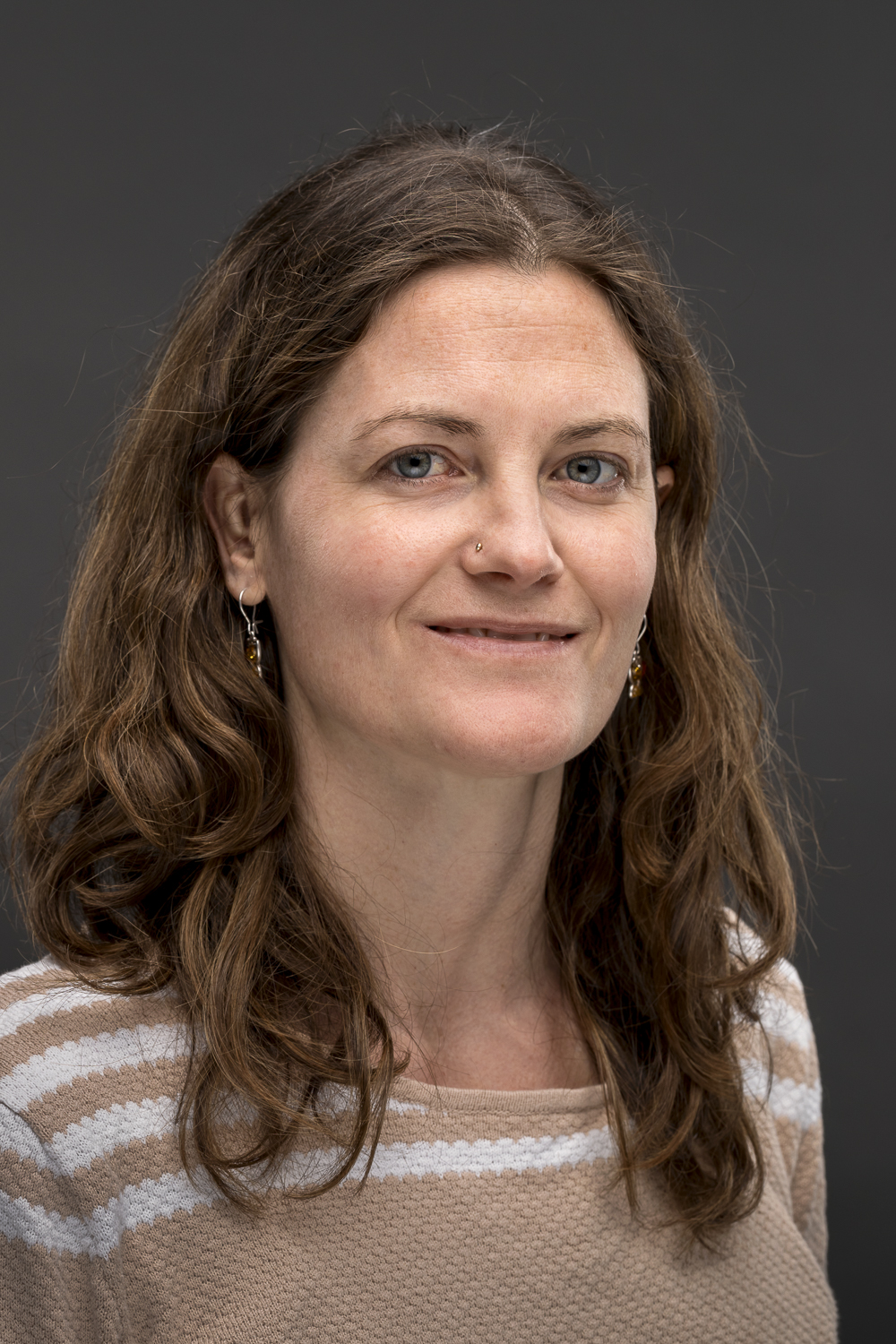
Elodie F. Briefer
Elodie F. Briefer is an Associate Professor in vertebrate social behaviour, with over 20 years of experience in the field of animal behaviour and more particularly bioacoustics. She has been working on a wide range of species, from songbirds to ungulates, and has published > 75 peer-reviewed papers. Since 2019, she has been leading the Behavioural Ecology Group at the University of Copenhagen. Their main projects combine the topics of acoustic communication, emotions, and social networks, in order to understand how emotions influence communication, how emotions are transmitted between individuals and influence social relationships, and how acoustic communication affects social interactions. They are also very interested in how our research can be used to improve animal welfare and for conservation purposes.
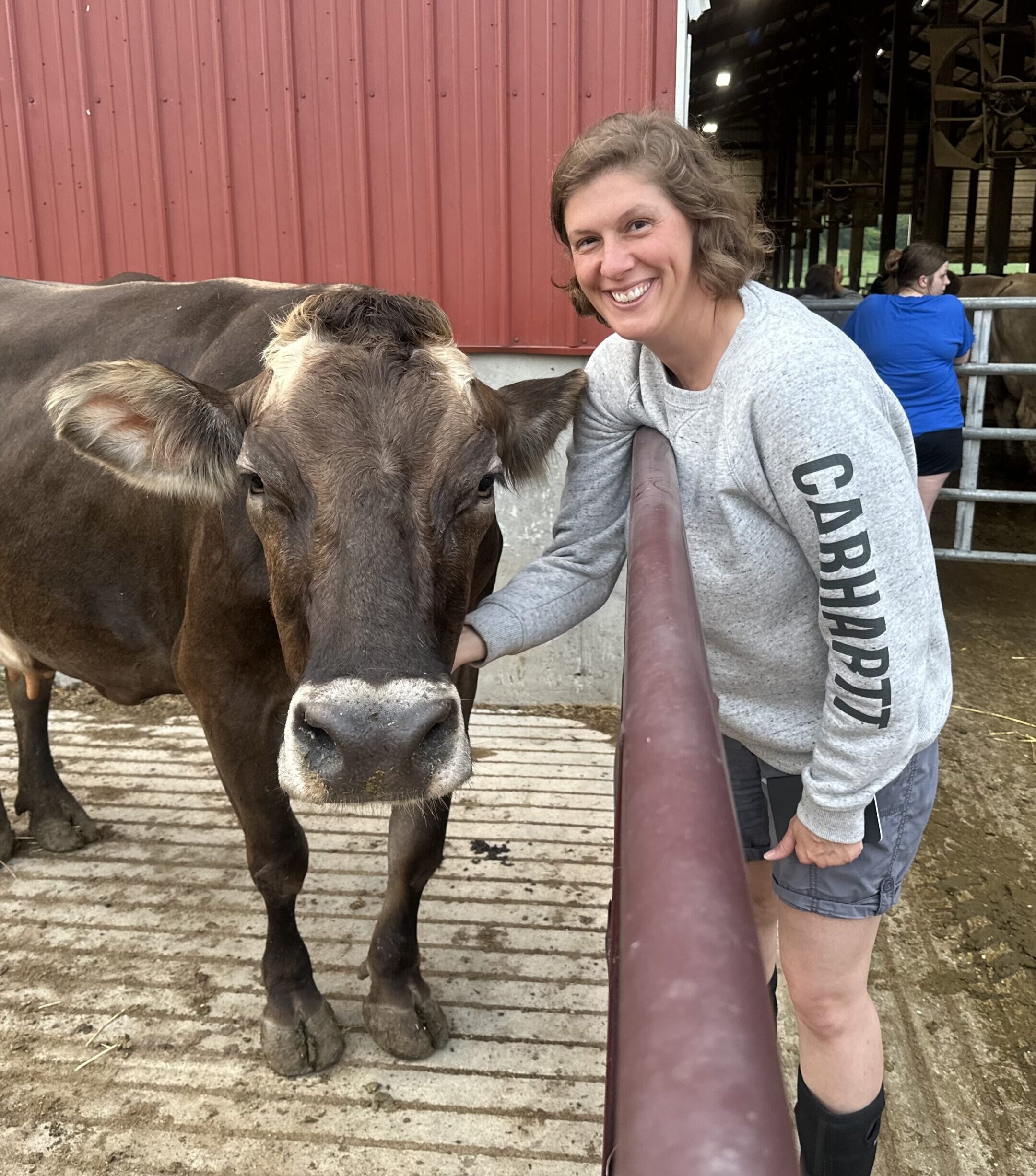
Katy Overstreet
Katy Overstreet is an Assistant Professor of Environmental Humanities and a core member
of the Centre for Sustainable Futures. Overstreet’s work investigates how demographic and
technoscientific change impacts co-species living and working in America’s Dairyland. In
particular, she examines practices of care and processes of bioindustrialization in
encounters between farmers, agricultural experts, cows, gut microbes, and multispecies life
in Midwestern landscapes. Furthermore, she is conducting multi-sited ethnographic research
on the dilemmas of sustainability and experimentation in efforts to make farm animals more
eco-friendly in the US and Denmark.
Katy is the coordinator of the Landscapes, Senses, and Ecologies Research Cluster at the
Saxo Institute, the co-editor of the journal Culture and History-Student Research Papers and
co-editor on Wording and Worlding with Microbes, a lexicon on microbes as social actors
hosted by the Centre for the Social Study of Microbes (CSSM). Katy has published
numerous articles and book chapters and will soon submit a book manuscript on co-species
work and landscape change in America’s Dairyland based on extensive ethnographic
fieldwork among dairy farmers and agricultural experts. In her research and teaching, Katy is
committed to critical engagement with co-species social formations, technoscientific power
relations, and livability in the Anthropocene.
Kara Oehler
Kara Oehler is Director of Climate Sound & Society at metaLAB at Harvard and an artist-in-residence at Third Ear. Integrating climate and biodiversity journalism and policy with sound-based scientific researchers and artists from around the world, Climate Sound & Society works in partnership with institutions such as metaLAB(at)Harvard and University of Copenhagen, Museum of the United Nations and Ours to Protect (Ireland). She is also an embedded journalist with the Behavioural Ecology Group at University of Copenhagen. Oehler’s work appears in The New York Times Magazine, RadioLab, The Atlantic, Morning Edition, the Center for Investigative Reporting, Museum of Modern Art NY and others and has been recognized by Peabody, Rockefeller United States Artists, Radcliffe Institute for Advanced Study and others. Oehler has co-founded and led multiple pioneering, interdisciplinary organizations, including Climate Sound & Society, metaLAB(at)Harvard, Zeega, COVID Tracking Project at The Atlantic and UnionDocs Center for Documentary Art.
Credits
A collaboration between University of Copenhagen's Center for Applied Ecological Thinking (CApE) and metaLAB(at)Harvard's Institute for Climate Sound & Society. Curated by Kara Oehler with Stefan Gaarsmand Jacobsen and CApE.